Introduction
Aerospace systems operate in some of the harshest environments in engineering. Bearings used in aircraft engines, landing gear assemblies, flight control actuators, satellite mechanisms, and space equipment must endure rapid temperature fluctuations, extreme loads, intense vibration, near-vacuum conditions, and long duty cycles. Traditional materials often fail under these stresses, making advanced materials essential for designing reliable, high-performance aerospace bearings.
Material science directly impacts reliability, safety, energy efficiency, and service life in aerospace engineering. Stronger, lighter, and more stable materials allow bearings to perform consistently, even under severe stress.
What Makes Aerospace Bearings Unique
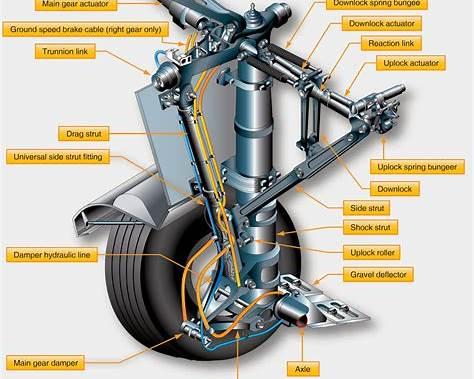
Aerospace bearings differ significantly from standard industrial bearings due to their demanding environment. They must provide:
-
High strength-to-weight ratio
-
Precise operation under heavy and fluctuating loads
-
Exceptional thermal stability
-
Resistance to fatigue and corrosion
-
Smooth performance at high rotational speeds
-
Reliable function when lubrication is limited
-
Zero tolerance for failure
Even a minor failure can compromise mission safety, emphasizing the importance of advanced material systems.
Challenges in Extreme Aerospace Conditions
Aerospace bearings face unique challenges that make material selection critical:
-
Extreme temperature changes: Components may experience sub-zero temperatures at high altitudes and extremely high temperatures in jet engines.
-
High-speed rotation: Engine bearings rotate at very high speeds, generating substantial centrifugal forces.
-
Vacuum or near-vacuum environments: Space applications limit lubrication availability, increasing the need for thermal stability.
-
High vibration loads: Continuous vibration and shock require fatigue-resistant materials.
-
Corrosion risk: Exposure to hydraulic fluids, humidity, atmospheric chemicals, and jet fuel can degrade standard materials.
-
Frequent cyclic stresses: Repeated acceleration, deceleration, and directional changes place heavy fatigue loads on bearings.
These conditions make careful material selection one of the most important design decisions in aerospace engineering.
How Advanced Materials Enhance Aerospace Bearing Performance
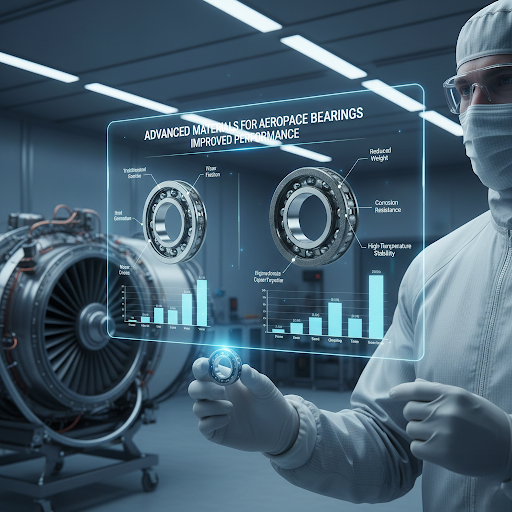
Advanced materials improve bearing performance by offering:
-
Higher hardness and wear resistance
-
Improved dimensional stability under temperature changes
-
Low friction characteristics
-
Higher fatigue strength
-
Better load distribution
-
Corrosion resistance
-
Lower density for improved fuel efficiency
Selecting the right material allows manufacturers to design bearings that operate reliably for longer periods, even in extreme environments.
Key Advanced Materials Used in Aerospace Bearings
-
High-purity stainless steels: Provide excellent corrosion resistance and strong performance at moderately high temperatures.
-
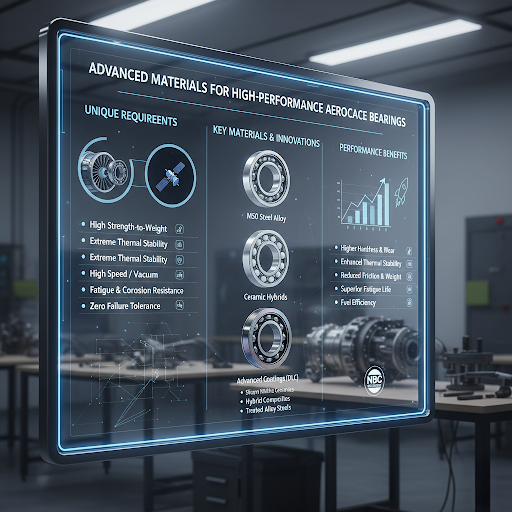
M50 and M50 NIL steels: Widely used aerospace steel grades offering high strength, thermal stability, and exceptional wear resistance.
-
Silicon nitride ceramics: Lighter, harder, and more heat-resistant than steel, reducing centrifugal forces and improving fatigue life.
-
Titanium alloys: Used where weight reduction and corrosion resistance are priorities.
-
Hybrid bearing materials: Combine steel races with ceramic balls for low friction, minimal thermal expansion, and high-speed capability.
-
Specially treated alloy steels: Advanced heat treatments enhance surface hardness and fatigue strength for reliable operation under heavy loads.
Benefits of Ceramic and Hybrid Bearings in Aerospace
Ceramic and hybrid bearings are increasingly popular due to their:
-
Lower density, reducing energy loss at high speeds
-
Superior thermal shock resistance
-
Minimal thermal expansion for stable performance
-
Higher fatigue life compared to steel
-
Reduced friction and heat generation
-
Lower lubrication requirements
-
Resistance to electrical arcing in aircraft systems
These characteristics make them ideal for jet engines, space mechanisms, and emerging electric aviation technologies.
Advanced Surface Treatments and Coatings
Surface engineering further enhances performance. Common aerospace treatments include:
-
Diamond-like carbon (DLC) coatings to reduce friction
-
Anti-wear coatings to prevent surface damage
-
Corrosion-resistant coatings for harsh environments
-
Thermal barrier coatings for extreme heat
-
Specialized heat treatments to improve strength and hardness
These technologies delay wear, prevent scoring, and stabilize bearing surfaces under stress.
NBC’s Capabilities in High-Performance Aerospace Bearings
NBC delivers advanced aerospace bearing solutions through:
-
Micron-level machining accuracy
-
Controlled heat treatment processes to enhance fatigue strength
-
Advanced metallurgy and material selection
-
Surface finishing technologies for smooth operation
-
Custom designs for high-temperature or high-speed environments
-
Testing systems that simulate real aerospace conditions
This combination of engineering skill and material expertise ensures reliable solutions for the most demanding aerospace applications.
Real-World Aerospace Applications
Advanced materials enable bearings to perform reliably in:
-
Jet engine shaft assemblies
-
Auxiliary power units
-
Landing gear systems
-
Flight control actuators
-
Helicopter transmissions
-
Satellite deployment and guidance mechanisms
-
Spacecraft reaction wheels
-
Precision navigation equipment
Each application relies on material strength, wear resistance, and thermal stability for flawless operation.
Future Trends in Aerospace Bearing Materials
The evolution of material science promises further advancements:
-
New ceramic materials with improved toughness
-
Self-lubricating materials suitable for space
-
Nano-engineered coatings to reduce friction
-
Lightweight composite metals
-
Smart materials that adapt to temperature changes
-
Materials tailored for electric aircraft and hypersonic vehicles
These innovations will continue to push aerospace performance boundaries.
Conclusion
Aerospace bearings face some of the most extreme operating conditions in engineering. Advanced materials are crucial to improving performance, reliability, and safety. Stronger alloys, ceramic technologies, hybrid materials, and precision heat treatments allow aerospace bearings to withstand high speed, intense heat, and challenging environmental conditions. Selecting the right material ensures a high-performance bearing with long life and consistent functionality, even under the harshest conditions.
Frequently Asked Questions
1. What makes an aerospace bearing different? It must operate reliably under high temperature, high speed, and high vibration conditions, with zero tolerance for failure.
2. Why are advanced materials essential for aerospace applications? They provide superior thermal stability, strength, corrosion resistance, and extended fatigue life.
3. Are ceramic bearings used in aerospace? Yes. Ceramic bearings are used for high-speed, low-friction, and high-temperature applications.
4. How do coatings improve aerospace bearing performance? Coatings reduce friction, protect surfaces from wear, and enhance corrosion resistance.
5. What factors influence material selection for an aerospace bearing? Temperature range, load conditions, rotational speed, lubrication environment, and required service life.