Categories
Blog

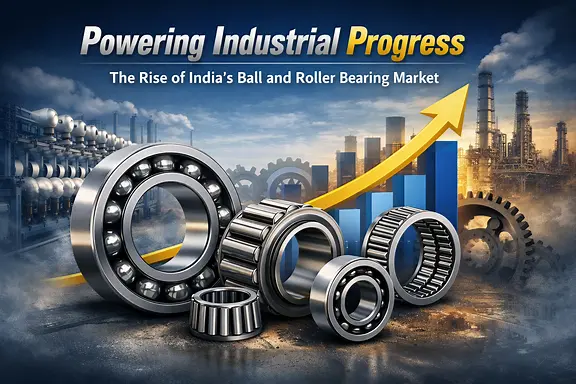
Powering Industrial Progress: The Rise of India’s Ball and Roller Bearing Market

Powering Industrial Progress: The Rise of India’s Ball and Roller Bearing Market

India’s growth story is unfolding across highways, manufacturing plants, railway networks, renewable energy parks, and modern industrial hubs. While large infrastructure projects and heavy machinery often capture the spotlight, a critical component quietly enables this progress behind the scenes — ball and roller bearings.

These precision-engineered components ensure smooth motion, reliability, and efficiency in machines across industries. By reducing friction and supporting controlled motion, bearings play a fundamental role in maintaining the performance and longevity of mechanical systems.

As India strengthens its position as a global manufacturing hub, the country’s bearing industry is experiencing significant growth driven by industrial expansion, technological advancement, and increasing global demand.

Industries ranging from automotive and railways to renewable energy and heavy manufacturing depend heavily on reliable bearing solutions. Without these components, machines would experience excessive wear, higher energy losses, and frequent breakdowns.

As a result, bearings play a crucial role in supporting India’s journey toward industrial development, infrastructure growth, and global competitiveness.

Bearings: The Unsung Enablers of Industrial Motion Industrial Bearings in Motion

At their core, bearings reduce friction between moving components and support rotational or linear motion. However, in modern industrial applications, their role goes far beyond basic motion support.

Today’s bearings must deliver:

  • High load-carrying capacity

  • Long operational life

  • Superior energy efficiency

  • Minimal maintenance and downtime

  • Reliable performance under extreme operating conditions

In modern engineering systems, bearing performance is evaluated using parameters such as dynamic load rating, fatigue life, lubrication regime, and operating temperature limits.

From automotive engines and railway axles to wind turbines and heavy industrial machinery, bearings are mission-critical components where reliability directly impacts operational continuity and safety.

A single bearing failure in large industrial equipment can lead to costly downtime, production losses, and safety risks. Therefore, industries rely on high-quality bearings designed to perform under demanding operating environments.

India’s Bearing Market: A Growth Story in Motion

Over the past decade, India’s bearing industry has evolved rapidly, supported by strong domestic demand and growing export opportunities. Industrial expansion, infrastructure development, and manufacturing growth are creating sustained demand for advanced bearing technologies.

Several key sectors are driving this market growth

Automotive and Electric Vehicle Expansion

India has emerged as the third-largest automobile market in the world, generating substantial demand for bearings across passenger vehicles, commercial vehicles, two-wheelers, and off-highway equipment.

With the rapid adoption of electric vehicles (EVs), the industry is witnessing increasing demand for high-precision, low-noise, and energy-efficient bearings designed specifically for electric drivetrains and high-speed motors.

These specialized bearings help improve efficiency, reduce vibration, and enhance overall vehicle performance.

Infrastructure Development and Railways

India’s large-scale investments in infrastructure — including metro rail systems, dedicated freight corridors, highways, and ports — are driving long-term demand for heavy-duty roller bearings capable of handling high loads and continuous operation.

The modernization and expansion of railway networks have further strengthened the need for reliable bearing technologies that can operate under demanding conditions.

Roller bearings used in rail and heavy industrial equipment must withstand high loads, continuous duty cycles, and harsh environmental conditions.

Industrial Manufacturing and Automation

As industries adopt automation, robotics, and smart manufacturing technologies, the demand for high-precision bearings with tight tolerances and consistent performance has increased significantly.

Bearings today play a critical role in equipment such as:

  • CNC machines

  • Industrial gearboxes

  • Robotics and automation systems

  • Material handling equipment

  • High-speed production machinery

The shift toward precision manufacturing is encouraging the development of advanced bearing solutions capable of supporting higher speeds, improved efficiency, and longer service life.

Renewable Energy and Power Generation

India’s ambitious renewable energy goals, particularly in wind and solar power, are creating new opportunities for the bearing industry.

Wind turbines operate under highly variable loads, harsh environmental conditions, and continuous duty cycles. Bearings used in these systems must deliver exceptional durability, corrosion resistance, and long operational life to ensure reliable power generation.

High-performance bearings help reduce maintenance costs and increase the reliability of renewable energy infrastructure.

Ball Bearings vs Roller Bearings: Serving Diverse Industrial Needs

The Indian bearing market continues to grow across both ball bearing and roller bearing segments, each designed to meet specific operational requirements.


Ball Bearings

Ball bearings are commonly used in applications requiring:

  • High rotational speeds

  • Low friction

  • Compact design

Typical applications include electric motors, pumps, fans, automotive components, and household appliances.

Their ability to operate efficiently at high speeds makes them ideal for light to medium load applications.

Roller Bearings

Roller bearings are designed to handle higher radial loads and demanding industrial environments.

These bearings are widely used in:

As industrial machinery becomes more sophisticated, industries increasingly demand application-specific bearing solutions rather than generic products.

Make in India: Strengthening Domestic Manufacturing

Make in India manufacturing momentum

Government initiatives such as Make in India, Atmanirbhar Bharat, and the Production Linked Incentive (PLI) scheme have significantly strengthened domestic manufacturing capabilities in the bearing sector.

Indian bearing manufacturers are now:

  • Expanding production capacities

  • Investing in advanced manufacturing technologies

  • Improving material science and heat-treatment processes

  • Adopting global quality and testing standards

These efforts are gradually reducing import dependency while positioning India as a competitive exporter of high-quality bearings to global markets.

Technology and Innovation: Redefining Bearing Performance

Modern bearing manufacturing combines advanced metallurgy, precision engineering, and digital monitoring technologies to improve reliability and operational performance.

Key innovation trends shaping the industry include:

  • Advanced steel and alloy compositions for improved fatigue life

  • Optimized cage designs for higher speed and stability

  • Enhanced sealing systems for contamination protection

  • Precision grinding and surface finishing to reduce friction

  • Compatibility with condition monitoring and predictive maintenance systems

These technological advancements are helping industries extend equipment life, improve operational efficiency, and reduce total cost of ownership.

Global manufacturers such as SKF, Timken, and Schaeffler have also played an important role in advancing bearing technology and establishing global quality benchmarks.

The Growing Importance of the Bearing Aftermarket

Beyond OEM supply, the industrial aftermarket for bearings is expanding rapidly in India.

Industries such as cement, steel, mining, and power generation require regular bearing replacement and maintenance to ensure uninterrupted operations.

This has increased the importance of:

Manufacturers that combine high-quality products with strong technical support are gaining increasing trust among industrial customers.

Exports and Global Competitiveness

India’s bearing industry is no longer limited to domestic consumption. Indian manufacturers are increasingly supplying bearings to international OEMs and aftermarket customers across Europe, Asia, Africa, and the Americas.

Key factors supporting export growth include:

  • Cost-effective manufacturing

  • Skilled engineering talent

  • Compliance with international quality standards

  • Capability to customize solutions for diverse applications

This growing global acceptance highlights India’s emergence as a reliable and competitive bearing manufacturing hub.

The Road Ahead: A Market Built for Momentum

India Bearing Market Future Growth

India’s ball and roller bearing market is expected to witness sustained growth in the coming years.

Key growth drivers include:

  • Continued industrialization and infrastructure expansion

  • Rapid adoption of electric mobility

  • Expansion of renewable energy capacity

  • Increasing focus on domestic manufacturing and exports

  • Continuous innovation in bearing design and materials

As machines become faster, smarter, and more efficient, the importance of precision components like bearings will only continue to grow.

Conclusion: Supporting India’s Progress, One Rotation at a Time

India Bearings Driving Progress

The rise of India’s bearing industry reflects the nation’s broader journey toward engineering excellence, manufacturing self-reliance, and global competitiveness.

At the center of this progress are precision components that quietly enable motion, reliability, and efficiency across industries.

With strong manufacturing capabilities, advancing technology, and a commitment to quality, India is well positioned to power the next generation of industrial growth.

And as the country continues to move forward, the silent rotation of bearings will remain essential in driving machines—and industries—around the world.
Categories
Blog

Bearing Size Calculator: Get the Right Bearing Every Time with NBC Bearings

Introduction

Every machine, from a car engine to an industrial press, depends on bearings to reduce friction and support moving parts. Picking the right bearing size is one of the most important decisions in machine design — and one that can save you from costly failures later on. If a bearing is too small, it will overheat or wear out too soon. If it’s too large, it wastes space, increases cost, and adds unnecessary weight. That’s where a bearing size calculator makes life easier. By entering your application’s load, speed, and working conditions, it can recommend the ideal bearing size. At NBC Bearings, one of India’s leading bearing manufacturers, engineers can now use the NBC Bearing Calculator — a simple, step-by-step digital tool that helps select the perfect bearing for any application.

What Exactly Is a Bearing Size Calculator?

A bearing size calculator is an engineering tool that uses data like load, speed, temperature, and lubrication to calculate the bearing’s dynamic equivalent load and expected life (L10). Traditionally, these calculations were done manually using formulas from the ISO 281 standard — a time-consuming process. The main equation combines both radial and axial forces into one value using: P = X·Fr + Y·Fa Here, Fr is the radial load, Fa is the axial load, and X and Y are correction factors based on the bearing type. NBC’s calculator automates this entire process. It pulls data directly from NBC’s product catalogue, performs the calculations instantly, and gives you reliable results without the manual math.

Why Getting the Size Right Matters

Choosing the correct bearing size affects everything — from performance to safety.
  • Longer service life: A properly sized bearing avoids fatigue, cracking, and early wear.
  • Better efficiency: The right fit minimizes friction and power loss.
  • Less downtime: Mismatched bearings cause heat, noise, and vibration, which can lead to breakdowns.
  • Improved safety: Especially in heavy machinery, the wrong bearing size can create serious risks.
In short, precision in sizing pays off in reliability, performance, and peace of mind.

Understanding Bearing Codes and Dimensions

Bearings may look simple, but their numbers tell a complete story. Each bearing code contains details about its size and type.
  • Prefix: Identifies special versions or components.
  • First digit: Shows the bearing type (like deep groove, thrust, or roller).
  • Second digit: Indicates the series — light, medium, or heavy — which relates to load capacity.
  • Third and fourth digits: Represent the bore diameter in millimetres.
  • Suffix: Describes design details such as seals, clearance, or cage type.
Knowing how to read these codes helps ensure you select exactly what your equipment needs.

How the NBC Bearing Calculator Works

The NBC Bearing Calculator walks you through two simple stages:

Step 1: Select a Bearing

You can either:
  • Search by part number if you already know the bearing you need, or
  • Browse from a list of bearing types such as Deep Groove Ball Bearings, Angular Contact Bearings, or Tapered Roller Bearings.
Once you choose a type, the calculator displays all the related options — complete with ID, OD, width, and load ratings — so you can pick the right one easily.

Step 2: Enter Your Application Data

Next, enter a few details about your working conditions:
  • Radial and axial loads (Fr and Fa) – in kilonewtons. The calculator automatically applies the load equation.
  • Rotational speed (n) – in RPM.
  • Operating temperature – since higher temperatures affect material strength.
  • Lubrication type and viscosity – choose between oil or grease.
  • Contamination level – define how clean or dusty the environment is.
  • Reliability factor (a1) – select the reliability percentage you want (90%, 95%, or 99%).
Once the information is entered, click “Calculate.” The tool instantly generates results showing the bearing’s life expectancy and suitability.

Interpreting the Results

The results page gives you a clear picture of how the bearing will perform:
  • Dynamic equivalent load (P): The combined effect of all forces on the bearing.
  • Basic dynamic load rating (C): The load a bearing can handle for one million revolutions.
  • Bearing life (L10 or L10h): Calculated using standard ISO 281 formulas.
  • Adjusted life (Lnm): Accounts for reliability and environmental conditions.
These results let you see whether your chosen bearing will last as long as you need or if you should go for a larger one.

Tips for Accurate Results

To get the best out of your bearing calculations:
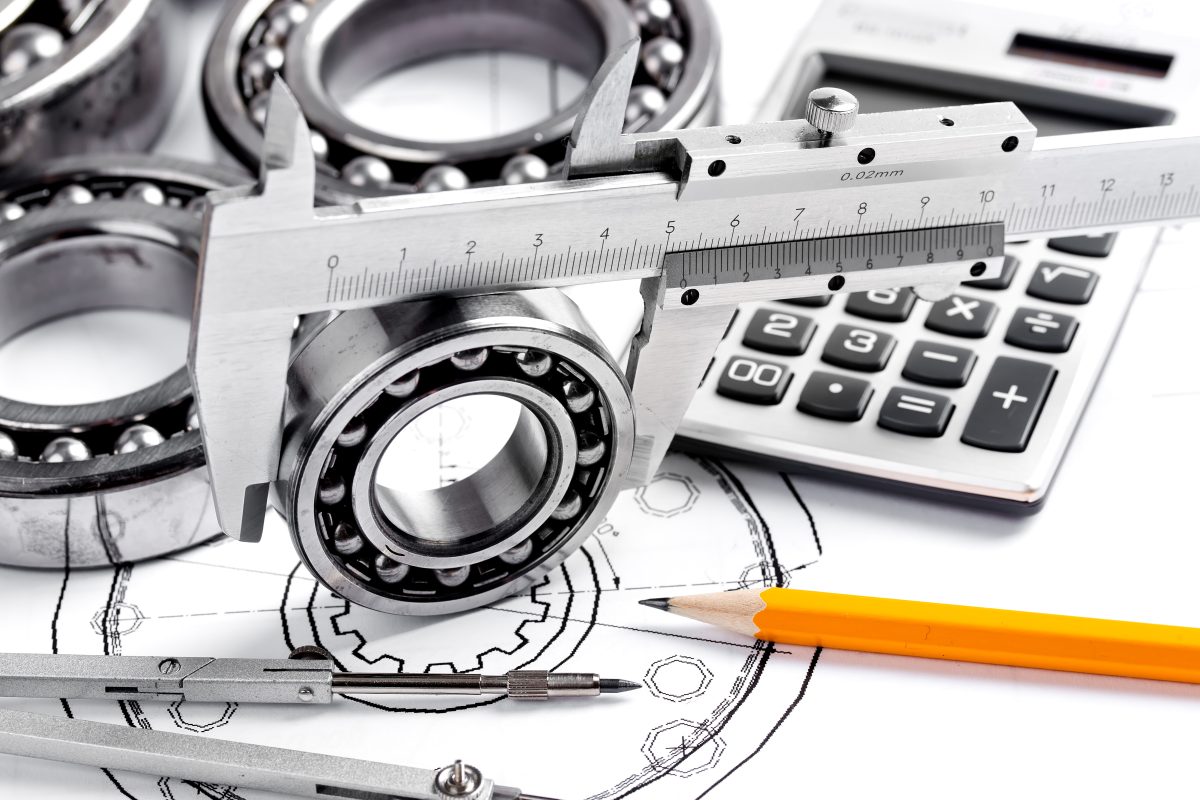
  • Measure bore, outer diameter, and width carefully using precise tools.
  • Use real load data, not just theoretical values.
  • Factor in speed, lubrication, and temperature accurately.
  • Always check bearing clearance — it affects performance and heat buildup.
  • Consider contamination levels and use the right protective measures.
  • Stick to industry best practices when measuring, recording, and selecting bearings.
These small details make a big difference in long-term performance.

Conclusion

A bearing’s efficiency and life depend on more than just quality — the right size and correct installation are just as important. Manual calculations can be complex and time-consuming, but with NBC’s Bearing Size Calculator, the process becomes quick, simple, and precise. By entering a few operating details, you can get accurate results based on the ISO 281 standard and NBC’s trusted catalogue data. It’s a reliable way for engineers, designers, and maintenance professionals to make confident decisions — every single time. Try it yourself today. Visit the NBC Bearing Size Calculator and see how effortless bearing selection can be.
Categories
Blog

Industrial Applications of Bearings – A Comprehensive Guide

Do you know what “bearings,” a mechanical component, actually do? They are so essential to the machine sector that they have been dubbed the sector’s “bread and butter.” They are employed in a wide variety of machines. Still, because they operate in secrecy, most individuals not engaged in the machine sector probably have no idea what they mean when they hear the name.

Bearings come in a wide range of shapes and sizes and are an essential tribological part of many different types of machinery. In a system that may be under static or dynamic loading, they can be described as a machine element that supports/permits only a particular form of motion (limitation of degrees of freedom).

What are bearings?

Bearings are “components that aid in the rotation of objects.” Inside the equipment, they support the shaft that revolves.

Automobiles, aircraft, power generators, and other devices need bearings. Even common household items like refrigerators, vacuum cleaners, and air conditioners we use daily contain them.

The rotating shafts of the wheels, gears, turbines, rotors, etc., in those devices, are supported by bearings, enabling smoother rotation. Although bearings in industrial applications may appear straightforward mechanical components initially, they are essential to our survival.

Purpose of Bearings

Bearings primarily avoid direct metal-to-metal contact between two elements in relative motion. By doing this, friction, heat production, and, ultimately, part wear and tear are avoided. As low-friction rolling takes the place of sliding motion, it also lowers energy consumption.

Additionally, they transfer the rotating element’s load to the housing. This load could be either radial, axial, or both. A bearing, as previously mentioned, limits the freedom of motion of moving parts in specific directions.

Different Types of Bearings

There are various types of bearings, each used for a particular function and designed to support a specific type of load, like ball bearings.

Ball Bearings

A ball bearing is a specific kind of rolling-element bearing that uses balls to keep the bearings’ inner and outer moving components apart. A ball bearing’s main functions are to support radial and axial loads and lessen rotational friction. Ball bearings in industrial applications have a straightforward design, are reliable, and are simple to maintain. They come in open and sealed varieties and single and multiple-row styles. They are appropriate for high speeds since they have low frictional torque.

Ball bearings connect the shaft to the motor housing, for instance, in electrical motors when the shaft is free to rotate but the motor housing is not. They are further divided into

Applications of the ball bearings:

  • Household items: Bicycles, Washing machines, Hair dryers, Fishing rods, DVD players, and Food processors.
  • Office equipment: Fax machines, hard drives, fans, etc. 
  • Industries: Elevators, assembly lines, Chain saws, power pumps, toy manufacturing, etc.
  • Automotives: Engines, steerings, electric motors, gearboxes, etc.

Advantages of ball bearings:

  • Do not require much lubrication.
  • Long service life.
  • Low price.
  • Can handle thrust hold.
  • Good wear resistance.

Disadvantages of ball bearings:

  • Can break easily due to shock
  • Can be loud
  • Fail to handle heavyweight

Cylindrical Roller Bearing

The outer ring, inner ring, and cylindrical roller bearing roller all have a straight geometry. The cage may be made of brass, steel, or polyamide. You can separate the outer and inner rings. As the roller makes line contact with the raceway, these bearings can support significant radial loads. The bearings come in a variety of styles and dimensions.

Types of cylindrical roller bearing

  • Single row
  • Double row
  • Four rows
  • Full Complement
  • Thrust cylindrical roller

Application of cylinder roller bearings:

  • Mining,
  • petroleum production,
  • rubber mixing equipment,
  • electric motors,
  • rolling machines, etc.

Advantages of cylindrical roller bearings:

  • They offer excellent stiffness
  • These bearings can face challenges of heavy radials and high speed.
  • It comes in split and sealed variants
  • Low friction
  • Long service duration

Disadvantages of cylindrical roller bearings:

  • Not suitable for thrust loads
  • When the inner or outer rings have two ribs, cylindrical roller bearings can withstand some axial load in one direction.
  • Double-row cylindrical roller bearings are utilized largely in precision machine tools and have high radial stiffness.

Tapered Roller Bearings

In general, taper roller bearings application can be mounted independently from the cup because the cone assembly, which consists of the inner ring with roller and cage, is removable (outer ring). Mounting is made simpler by being detachable. The appropriate rolling motion of the roller on the track surfaces of the cone and cup is ensured by the projection lines of all the taper surfaces (Cup, Cone, and Roller) meeting at a single point on the bearing axis, known as the apex point. Single and double-row taper roller bearing applications in inch and metric series are produced by NBC.

Types of Tapered Roller Bearings

  • Single row
  • Double row
  • Four rows
  • Tapered roll thrust

Application of Tapered Roller Bearings

  • Agriculture
  • construction & mining industries
  • sports robot combat
  • propeller shaft
  • engine motors and reducers
  • wind turbines etc.

Advantages of Tapered Roller Bearings

  • Low friction
  • Long service life
  • Rigid bearing applications
  • Separable and interchangeable
  • Enhanced operational reliability

Disadvantages of Tapered Roller Bearings

  • Not suitable for high engine speed.
  • Increase heat due to large contact surfaces.

Spherical Roller Bearings

In general, spherical roller bearings in industrial applications are designed for high radial loads. They automatically make up for significant angular faults (shaft misalignments). They typically have a two-row arrangement, with shared spherical raceways in the outer ring between both rows of rollers.

Types of Spherical Roller Bearings

  • Spherical rollers.
  • Spherical roller thrust bearings.

Application of Spherical Roller Bearings

  • Industrial gearboxes
  • conveyors
  • cement grinding rolls
  • passenger coach axle boxes of railways.

Advantages of Spherical Roller Bearings

  • High load-carrying capacities
  • Low friction
  • Self-aligning
  • Reduce noise and vibration levels
  • Extended service life

Disadvantages of Spherical Roller Bearings

  • Lower limit speed
  • Poor heat dissipation with compound material
  • Relatively high starting friction

Needle Roller Bearings

Typically, needle rollers and cages make up needle roller bearings. To facilitate flawless rolling action, several needle rollers are put between two hardened, smooth surfaces, and a cage prevents the needle rollers from touching one another. Needle roller bearings have relatively tiny roll bearing application diameters and great length-to-diameter ratios, which increases load-carrying capacity and makes them perfect for oscillation motion.

Types of Needle Roller Bearings

  • Needle roller and cage assembly
  • Shell-type needle roller bearings
  • Machined ring needle roller bearings
  • Thrust needle roller bearing

Application of Needle Roller Bearings

  • Industrial gearboxes
  • conveyors
  • cement grinding rolls
  • passenger coach axle boxes of railways.
  • Rocker Arm Pivot
  • Pumps
  • Gearboxes
  • Two or More Stroke engines, etc.

Advantages of Needle Roller Bearings

  • Convenient at high and low temperatures
  • Easy lubrication
  • International standards and specifications are uniform.
  • Easy to get interchangeable products
  • Fewer friction

Disadvantages of Needle Roller Bearings

  • Loud noise
  • Complex structure
  • Fatigue.

Conclusion:

We don’t frequently see these products immediately in our daily lives, such as machines that produce energy, materials, or machining equipment.However, as we’ve mentioned in this blog, a lot of bearings in industrial applications.These bearing applications help our daily life in addition to the force and rotation.Additionally, the functionality required of bearings is growing, and bearings suitable for many applications are in high demand. NBC, the leading bearing manufacturer, is acknowledged for its excellent quality and delivery.

Categories
Blog

Electric Motor Ball Bearings – Everything You Need To Know

As the name suggests, electric motor ball bearings are bearings that are used to support electric motors and make them function by transmitting the power between various elements of the machine or rotating the shaft. To help you understand more, This blog covers everything you need to know about electric motor bearings. The bearings are critical to support varied types of machinery and can work in any kind of environment within the mechanical systems. Electric motor bearings are designed to provide smooth, efficient operation of electric motors. The bearings are made of high-quality materials that can withstand the high speeds and loads exerted by electric motors making them apt for high-performance applications while ensuring an optimal operational life. These bearings are available in a variety of sizes and designs to meet the specific needs of different electric motors.

Electric Motor Ball Bearings: How they Power Electric Motors

Electric motors require reliable solutions to work in an optimum manner. In terms of mechanical characteristics, electric motors are powerful and versatile, making them useful to work in high-performing machinery. Be it machines at the factory or electric vehicles, these bearings can be used in any of the electrical motors to allow rotary motion and transmit the power to make various parts of the machinery function well. The bearings that support these motors need to allow for smooth, quiet operation while providing key features such as high load capacity, long life spans, and low running noise.  Electric motor ball bearings are subject to a variety of forces, including radial and thrust loads, as well as vibration and shock. To withstand these forces, bearings must be carefully designed and manufactured. The most common material used for electric motor ball bearings is steel, but other materials such as ceramic or plastic may be used in some applications.

Use Case in Real-Time Scenario

The main performance characteristics of electric motor bearings are high load capacity, high-speed operation, high precision positioning, low noise, etc. They are used in the load and speed requirements of the motor. In terms of general applications, they are widely used electronic appliances, large-scale machinery in factories, electric vehicles, railways, wind turbines, etc. Since these machines have different requirements, various types of bearings are used in different scenarios to power them:
  1. Ball Bearings: These are mostly used in non-belted and direct-coupled applications where the motor runs under 150 horsepower speed. Ball bearings are designed specifically to handle both axial and radial loads in varied conditions within the machinery systems. The most common application of these types of electric motor bearings is in AC motors.
  2. Standard Roller Bearings: These kinds of roller bearings are designed for belted applications and are perfect for radial loads. They are not used to handle axial loads. It also works with motors that operate at a minimum of 150 HP.
  3. Angular Contact Ball Bearings: These kinds of electric motor bearings are perfect for high-speed rotating applications with axial loads. It can be configured with different types of cage designs and rows.
  4. Cylindrical Roller Bearings: These roller bearings are perfect for handling extremely high axial loads. Cylindrical roller bearings work efficiently at both medium and high speeds and support several design alternatives as per the mechanical applications. These are mostly used for belt or gear-driven electric motors.
  5. Deep Groove Ball Bearings: These ball bearings are a perfect match for electrical motors as it is apt for high-speed applications supporting moderate-type axial and radial loads.
  6. Sealed Bearings: These are specially designed bearings that work in contaminant-prone environments. However, they have a limited life span as they cant be re-lubricated.
  7. Shielded Bearings: Shielded bearings are specially designed to protect electric motors from dust, dirt, and other debris. They are made with a metal shield that covers the bearing, preventing contaminants from entering and damaging the sensitive components.

Conclusion

This blog has covered various aspects related to electric motor bearing as these bearings are the perfect fit for all kinds of performance needs. Be it any kind of motor, there is always a type of bearing that exists to meet mechanical needs. While choosing a bearing, you should also consider checking out the design and specifications needed to make it work in the best way without compromising any performance issues or incurring functional damage. This is something that makes the machinery or motor work in a reliable manner.
Categories
Blog

Things To Keep in Mind Before Purchasing Bearings For Industries

Bearings are available in different shapes, sizes, and types which may be specific for different applications in varied industries. This blog covers some of the points which you should keep in mind before purchasing bearings for industries. The bearings are high-precision components that power rotating assemblies in mechanical systems. Be it automobiles or aeronautics, it can be used everywhere in any size to accommodate acceleration and reduce friction between different parts or mechanical elements. The bearings are designed in such a way to make it work at high speed without generating much noise and vibration. Since varied industries might require bearings for different applications, you must consider a few things before purchasing them. Things to Keep in Mind Before Purchasing Bearings for Industries There can be various factors that might play a role in choosing the right kind of bearing depending upon your applications. Here are some of them to help you understand it right:
  1. Understanding Operating Conditions: The different applications might require different operating conditions which may vary in aspects such as loads, shaft requirements, the precision of radial positions, shaft strength requirements, etc. In such cases, it is recommended to determine which type of bearings are designed for such applications.
  1. Bearing Type and Arrangement: Bearing arrangements are a crucial factor to determine the support and location of shafts. It can be an axial or radial location where support may be required to position a shaft. For instance, bearing type and arrangement requirements can range as per location and non-locating bearing combinations where different types of bearings such as deep groove ball bearing or cylindrical roller bearings can be used. So, before planning the applications for bearings, it is crucial to understand which type of bearing and arrangement is required.
  1. Bearing Loads: It can be referred to as transferring of force from bearing to other rolling elements or bearing rings. The load generally can be axial, radial, or combined load. During the process of choosing a bearing for industrial application, it is crucial to first understand the type of the acting load and then plan which types of bearings might suit well in such an application.
  2. Considering Bearing Size: The bearing size should be adequate and precise in terms of its application. If bearing size is not considered in the right manner then it might result in rolling contact fatigue, breakdown, and deformation or might also decrease its service life.
  3. Lubrication Criteria While Selecting Bearing: It is also important to consider lubricating criteria while choosing the type of bearings. By referring to lubricant criteria, it suggests which type of lubricants such as oil or grease will be used in bearings.
  4. ISO Tolerance Classes: It signifies the tolerance capability of bearing under varied performing conditions. To understand it better, The ISO 492 Class 5 standard signifies the ability of a particular bearing to withstand tolerance limits while using it for high-performing or high-speed rotational applications.
  5. Bearing Internal Clearance: The bearing internal clearance defines how much a bearing ring can move relative to other rings in radial or axial directions. It signifies the operation of the bearing in a satisfactory manner without any constraints. This is also one of the key factors to consider while choosing bearings for industrial applications.
Conclusion The bearings can be considered vital components of any machinery or mechanical system. While it allows in reducing friction between various components, it also enables machinery and its components to operate well without any challenges. Before purchasing bearings for industries, it is crucial that you should consider varied factors to ensure optimum performance and functioning. Hopefully, the insights and points mentioned in this blog will help you get the right bearings perfect for your use case.
Categories
Blog

How Roller Bearings Are Different From Ball Bearings

There are slight differences between Roller Bearings and Ball Bearings which makes it different to be used in varied applications. Want to know more? Read this blog to know about how roller bearings are different from ball bearings.

While Ball Bearings and Roller Bearings are different types of bearings available in the bearings market they serve the purpose of working in different applications. They may have a similar function to perform in terms of offering smooth rotation and reducing the friction to support machinery but they are also differently designed to adapt in different situations. In aspects of the design also they might look similar but in literal terms, they have some distinctions which make them different.

What is Roller Bearing and Ball Bearing?

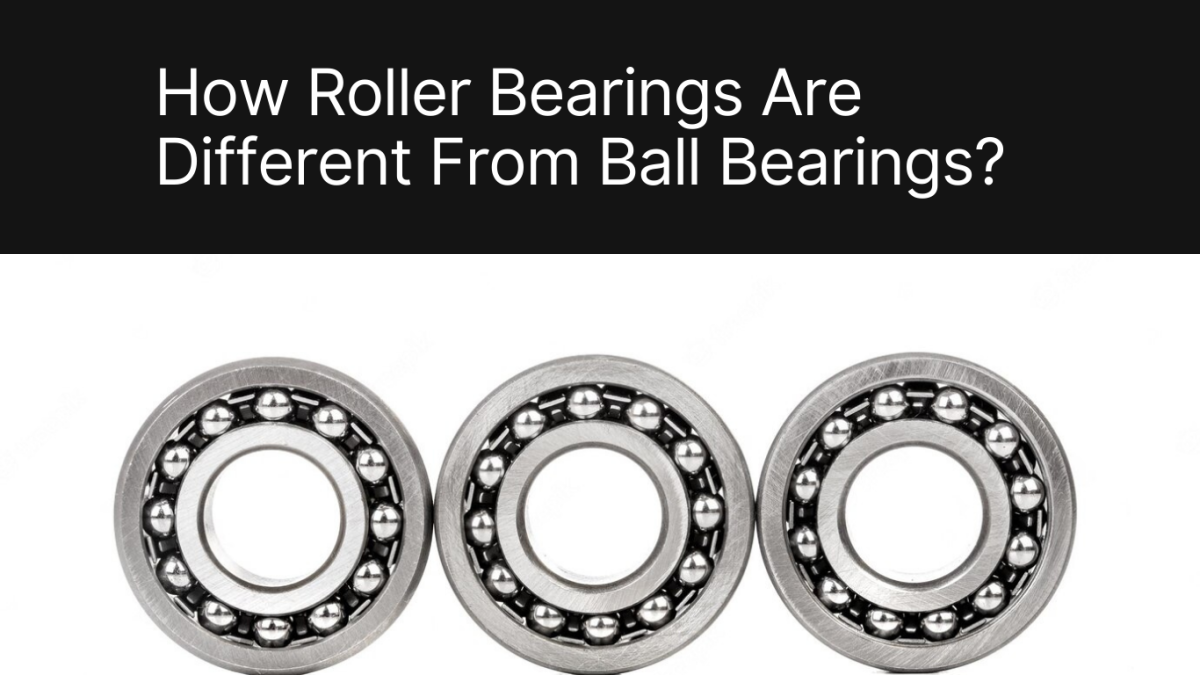
In mechanical aspects, the bearings are designed to bear loads which makes them capable to support the functioning of machinery in varied ways. They are both particularly designed to carry loads while reducing the friction between the points of contact. In terms of design, the ball bearing is a spherical unit while the roller bearing is a cylindrical unit.

Why are Bearings Used?

Metal to metal contact is next to possible as it can degrade the metal and result in wear and tear. In such cases, the role of bearing comes to reduce the friction by rolling two different surfaces over one another which are handled by rollers or balls. The Bearings are widely used in a number of different applications such as automobiles, machinery, mechanical equipment, railways, aeronautics, etc.

How Roller Bearings are Different from Ball Bearings?

Use of Rolling Element

In both Roller Bearing and Ball Bearing, there is a rolling element, cage and bearing rigs that consist of a bearing. When the rolling element in the bearing is a spherical ball then it is simply termed as a ball bearing.

Roller Bearings are designed to withstand Heavy Loads

The Roller Bearings use rollers in the place of balls which makes them capable to be used in radial and axial loads where misalignments are possible. In varied cases, they are used in automobiles like trucks, buses and vehicles.

Distribution of Loads

In the case of ball bearing, they work to transfer loads from outer raceway to inner raceway while in roller bearing it distributes the load over the large area making it desirable to manage load in a better way as compared to ball bearing. This happens due to line contact which makes it capable of handling resistance and shocks.

Which bearing is better

Both ball bearings and roller bearings may have different capacities, the roller bearing may be good in terms of shock and high resistance conditions while ball bearings might be good for operability at higher speeds.

Conclusion

The different bearings are designed to be used in different applications and are capable of handling varied loads. While some are designed best to be used in mechanical applications others can be used in components where there is a need of adjusting loads and radial applications i.e. automobiles. It is important to consider different factors while choosing bearings for your purpose.